01Resting voltage
Lights off, car off, ideally 30 minutes after driving. 12.6 V is full, ~12.2 V is half, under 12.0 V is in the ditch.
A battery that sat on a charger all night and still fails a load test is done. Auto parts stores often test free.
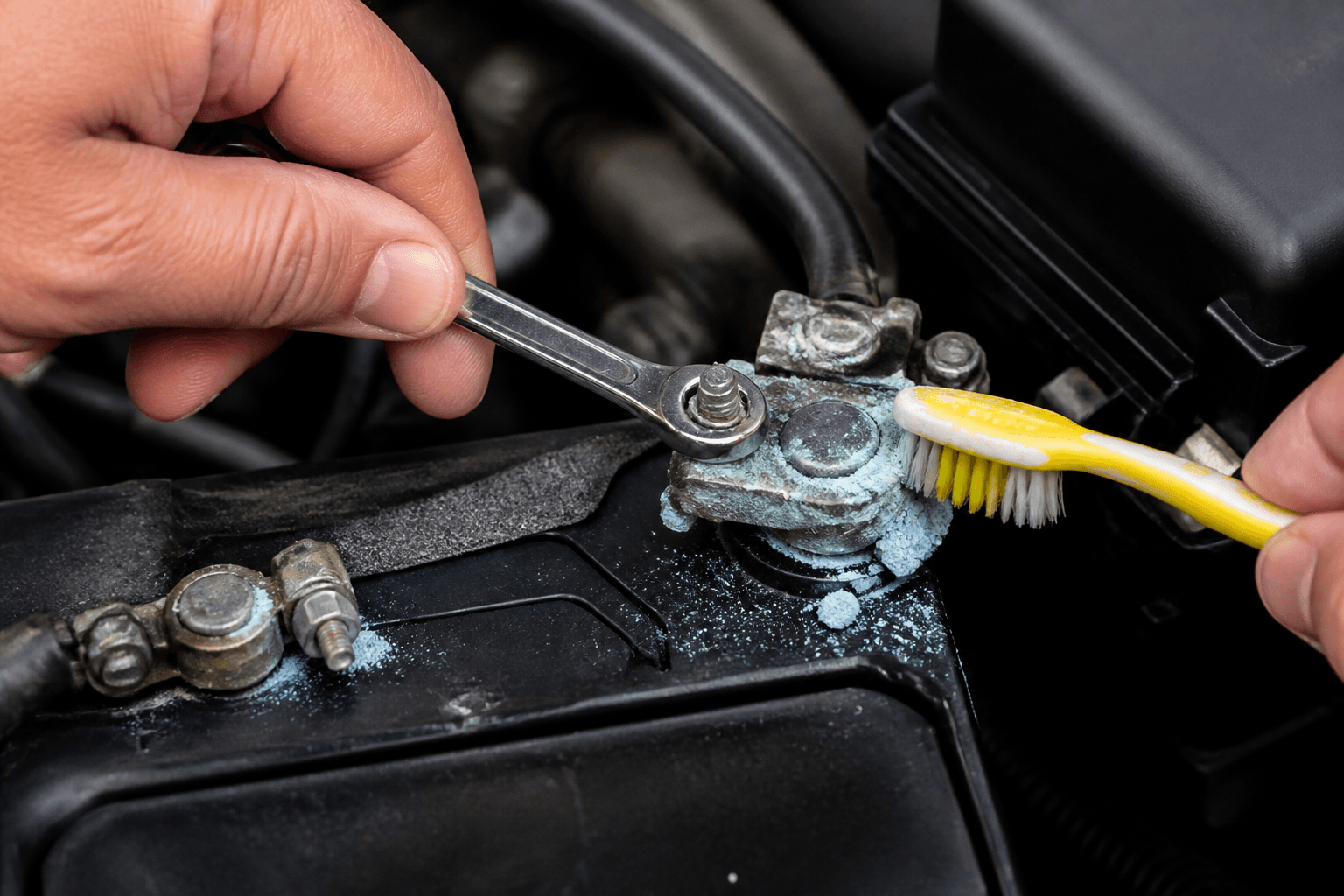
Test it, clean it, or replace it without wiping the radio
A complete battery job: resting voltage vs a real load test, disconnect order, cleaning corrosion, matching group size and CCA, bolting the hold-down, and the window-up relearn many cars need after a power loss.
Full step-by-step lessons with photos unlock with a subscription.


Free preview
See how every step looks — photo, checklist, and pro tips included.
Lights off, car off, ideally 30 minutes after driving. 12.6 V is full, ~12.2 V is half, under 12.0 V is in the ditch.
A battery that sat on a charger all night and still fails a load test is done. Auto parts stores often test free.
Engine running typically ~13.7–14.7 V. Much lower and the alternator or belt may be the real story. Look at the belt before you buy a battery 'just in case'.
Full library access
Subscribe for $9/month or $79/year — every category, every guide.
View plansEach tip has its own step photo — browse free, then unlock the full course.
More Auto & Mechanics tips →Related courses with photographed steps — browse before you subscribe.

DIY Oil Change at Home
Drain, filter, refill, torque — driveway oil change

Brake Pad Replacement
Front pads on a typical sedan — from jack stands to the bed-in drive

How Motorcycles Actually Work
Engine, fuel, cooling, electrics, suspension, brakes — systems map in plain English

Change a Flat Tire Yourself
Jack points, lug nuts, spare on, torque later — roadside without waiting an hour
$9/month · Cancel anytime · All courses included
Sign up to unlock