

LearnlystLearnlyst
Morning Routine That Doesn't Need Willpower
Everyday Life

Morning Routine That Doesn't Need Willpower

Wake up on autopilot — no 5 AM hustle, no cold showers required

45 min11 photographed stepsBeginner

This is not a '5 AM miracle morning' course. It is a sequence of small environmental changes — alarm placement, phone-free first ten minutes, same-time wake, water before coffee, a two-minute bed-make, and outfit selection the night before — that make your mornings feel calm instead of chaotic. Every technique relies on habit stacking and environment design, not motivation.

What you'll learn

  • Why alarm placement across the room eliminates snoozing without willpower
  • How a phone-free first ten minutes rewires your morning stress response
  • The two-minute bed-make trick that creates a sense of accomplishment before breakfast
  • An evening prep checklist that front-loads tomorrow's decisions to tonight

Inside this course

  • The alarm and wake systemSet up your environment so getting out of bed is the path of least resistance.
  • The first ten minutesPhone-free, water first, bed made.
  • Evening prepFront-load decisions to last night.
  • Troubleshooting the routineWhat to do when life breaks the streak.
  • Locking it inMaking the routine permanent.

Full step-by-step lessons with photos unlock with a subscription.

Morning Routine That Doesn't Need Willpower preview 1
Morning Routine That Doesn't Need Willpower preview 2
Morning Routine That Doesn't Need Willpower preview 3

Free preview

First steps from The alarm and wake system

See how every step looks — photo, checklist, and pro tips included.

Move the alarm across the room
01Move the alarm across the room

Tonight, place your phone or alarm clock on a surface at least 3 metres from your bed — across the room, on a dresser, or even outside the bedroom door if you can still hear it. The alarm volume should be loud enough that you cannot ignore it from the bed. This single change eliminates the snooze button because you are already standing by the time you turn it off.

The snooze cycle is the enemy: each 9-minute fragment of sleep is too short to be restorative and too long to be nothing. You wake groggier after three snoozes than if you had set one alarm 27 minutes later. Moving the alarm forces a binary choice — get up or walk back to bed, and once you are vertical, the urge to lie down fades within 30 seconds.

Pro tip. If you use your phone as an alarm, plug it in across the room with a short cable so you're not tempted to take it back to bed.


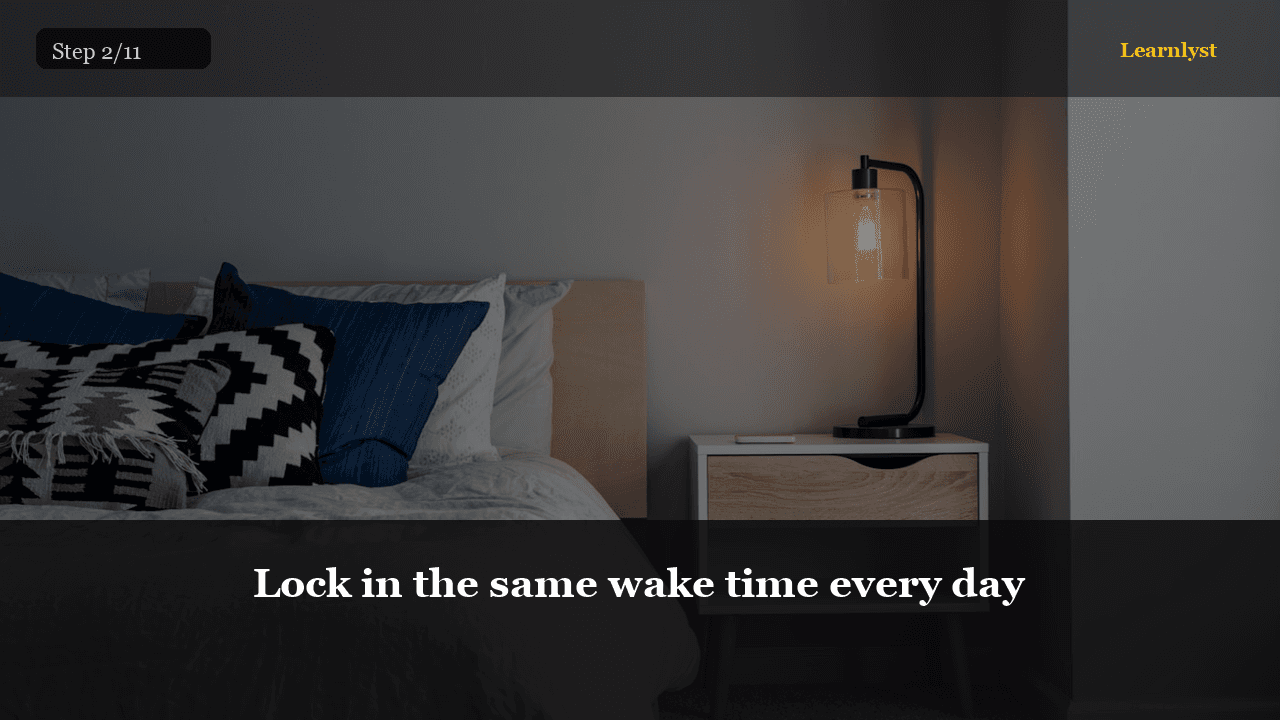
Lock in the same wake time every day
02Lock in the same wake time every day

Pick a wake time that you can realistically hold seven days a week, including weekends. If 6:30 AM is easy on workdays but impossible on Saturday, choose 7:00 AM instead. Consistency matters more than earliness. Your circadian rhythm adjusts to a fixed wake time within 5–7 days, and once adjusted, you will start waking naturally 5 minutes before the alarm.

Write the time on a sticky note and put it on your bathroom mirror. For the first two weeks, do not negotiate with yourself at night ('maybe I'll sleep in just this once'). Treat it like a flight departure — the time is set, not optional. After two weeks, waking at that time requires zero effort because your body expects it.

Full library access

Unlock every course

Subscribe for $9/month or $79/year — every category, every guide.

View plans

Free tips from this course

Each tip has its own step photo — browse free, then unlock the full course.

More Everyday Life tips →

More in Everyday Life

Related courses with photographed steps — browse before you subscribe.

Unlock Morning Routine That Doesn't Need Willpower + the full library

$9/month · Cancel anytime · All courses included

Sign up to unlock