
Step 5 of 16 · Weeknight Roast Chicken
When twine helps — and when it is theatre
When twine helps — and when it is theatre — step 5 of 16 in Weeknight Roast Chicken. Trussing (legs tied, wings tucked) makes a compact package that looks neat and keeps the breast from splaying so the skin does not tear.
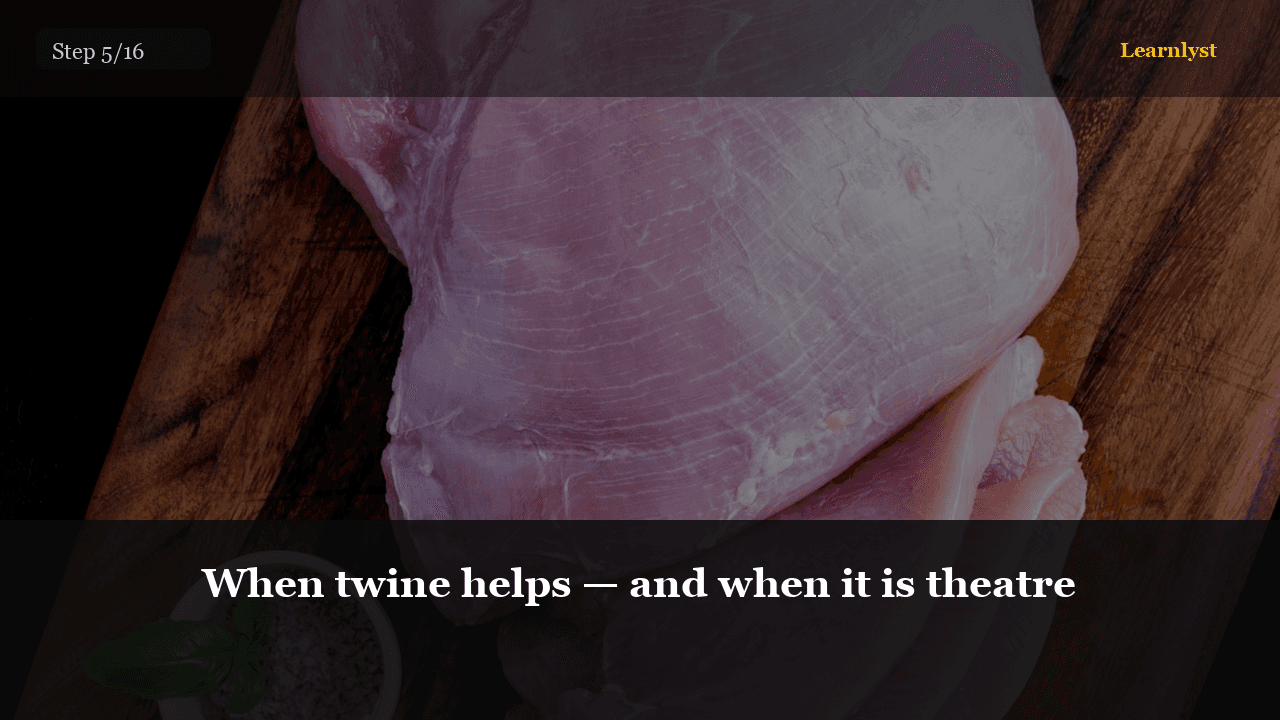
Free food & cooking tip: When twine helps — and when it is theatre (step 5 of 16 from "Weeknight Roast Chicken").
Trussing (legs tied, wings tucked) makes a compact package that looks neat and keeps the breast from splaying so the skin does not tear. It also tucks the thighs in, which can slow them down. For a 1.6–1.8 kg bird in a home oven, a loose truss is enough: tuck wing tips under the back, tie the legs together at the drumstick ends with 40 cm of twine. Do not cinch so hard the breast bulges like a football.
If you skip twine entirely, the legs cook a little faster and the breast stays a bit more exposed. That is not a failure. Fold the wing tips back so they do not burn to charcoal at 220°C. Stuff the cavity with ½ lemon and 4 smashed garlic cloves plus thyme — not a loaf of bread. Bread stuffing inside a weeknight bird is how you wait another 20 minutes and dry the meat.
2 more paragraphs in this tip — free with a Learnlyst account.
Create a free account to read the full tip
Unlock “When twine helps — and when it is theatre” plus daily tips. Guides and course pages stay public for search.
From the full photographed course
Weeknight Roast Chicken →This tip is one step — unlock all 16 steps inside Learnlyst.
More Food & Cooking tips




Ready for the full Learnlyst library?
Free account for daily tips · $9/mo or $79/yr for every course.